
Jupiter Water
We received a time capsule: water that predates Earth's oceans, preserved since the solar system's infancy and delivered to us from Jupiter.


On 22 March 1998, as seven boys played basketball near Monahans, Texas, a meteorite struck Ward County carrying 4.6-billion-year-old water trapped in purple salt crystals. This was the first extraterrestrial water ever captured on Earth: microscopic drops that had journeyed from an asteroid belt between Mars and Jupiter to land in West Texas.
One of the cosmic water meteorites was sent to NASA's Johnson Space Center for analysis.
Two stones, weighing 1344 g and 1243 g, fell in the city of Monahans, Texas, after two sonic booms and a fireball were observed over a wide area (up to 100 km from the fall site). One stone penetrated the asphalt on a city street and was found in the sandy subsurface.
I took these photographs around the Monahans dunes, one of the most beautiful places I have walked.
It looks like desert, but the sandhills are a semi-arid ecosystem where groundwater seeps up between 70-foot dunes, creating an entirely different world. Small oaks sink roots 90 feet deep to tap underground water, which stabilizes the dunes while badgers, kangaroo rats, and javelinas emerge at dusk to drink from the seeps. The forces that preserve water here are wind-carved sand acting as both barrier and vessel.
The Jupiter connection comes from the water itself, not the meteorite's origin. This meteorite carried "direct evidence of complex prebiotic chemistry from a water-rich world in the outer solar system" meaning the water and organic materials within it likely formed in the cold outer reaches beyond Jupiter's orbit during the early solar system, before being incorporated into asteroids that later migrated inward. It's the water that's from the Jupiter region, not the rock that carried it to Earth.
When such a rock strikes Texas sand, we receive a time capsule: water that predates Earth's oceans, preserved since the solar system's infancy and delivered to us. Space and time crystals.
September 12, 2025
—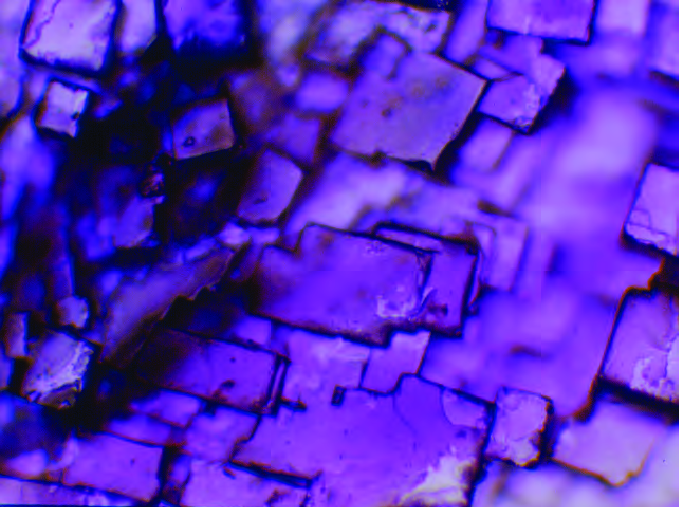
Image: Zolensky and Bodner. Monahans chondrite with fluid.
More portfolios
Jordan Belson
A number of really beautiful, small paintings and one sculpture were made between 1955 and 1961.
Image: Belson drawings at Eugene Binder / Kendra Jones


While he was best known for making films, Belson also created a significant body of two-dimensional works throughout the later half of the twentieth century. These paintings, drawings, and objects reflect his consuming interest in sacred art, cosmology, and his lifelong engagement with eastern philosophies.
Working at the Morrison Planetarium in San Francisco from 1957 to 1959, Belson created flowing, pulsing visual experiences that dissolved the boundary between inner and outer space. His films like Allures and Phenomena used interference patterns, optical effects, and kaleidoscope projectors to generate imagery that felt simultaneously microscopic and galactic. His dome projections prefigured 360-degree visual environments.
It was a pleasure to see these drawings at Eugene Binder: the first ever solo exhibition of his visual art works.
Cindy Keefer on Jordan Belson, Cosmic Cinema, and the San Francisco Museum of Art:
In 1953 Belson attended Fischinger’s performance of his Lumigraph (a mechanical color-light performance instrument) at the museum. The Lumigraph was performed in pitch darkness, and Fischinger created what he called “fantastic color plays” with spontaneous movements of colored light dancing to accompanying music. Belson was struck by the simple elegance and the mysterious soft, glowing images. Similarly, Belson later saw one of Thomas Wilfred’s Lumia color-light machines exhibited at SFMA, which became an influence on his later work.
A few years after Art in Cinema, Belson and Henry Jacobs created the legendary Vortex Concerts.
In May 1957 the first Vortex Concert was held at the California Academy of Science’s Morrison Planetarium. Featuring new electronic music from avant-garde composers worldwide curated by composer and DJ Henry Jacobs, Vortex was described by Belson (as visual director) as “a series of electronic music concerts illuminated by various visual effects.” In the blackness of the planetarium’s 65-foot dome, Belson created spectacular illusions, layering abstract patterns, lighting effects, and cosmic imagery, at times using up to 30 projection devices.
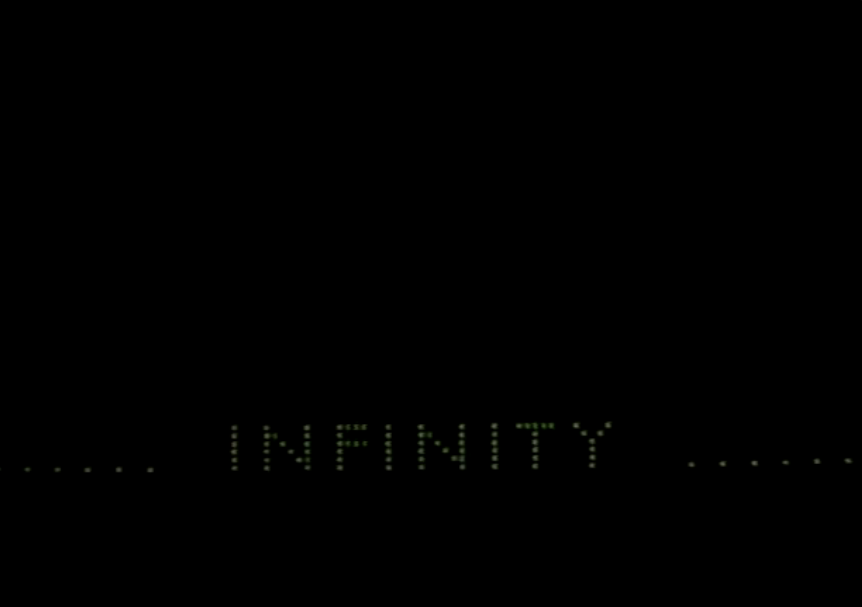
Infinity - Jordan Belson. 1980
—
September 5, 2025References
Keefer, Cindy. 'Jordan Belson, Cosmic Cinema, and the San Francisco Museum of Art'. Open Space (San Francisco Museum of Modern Art), 12 October 2010. https://openspace.sfmoma.org/2010/10/jordan-belson/. [archived]
More portfoliosJournal
Future Texas